
Community Advisory Council Visits the Za Travnik Non-Hazardous Red Gypsum Disposal Facility: Long-Term Management System Presented
09. 07. 2026
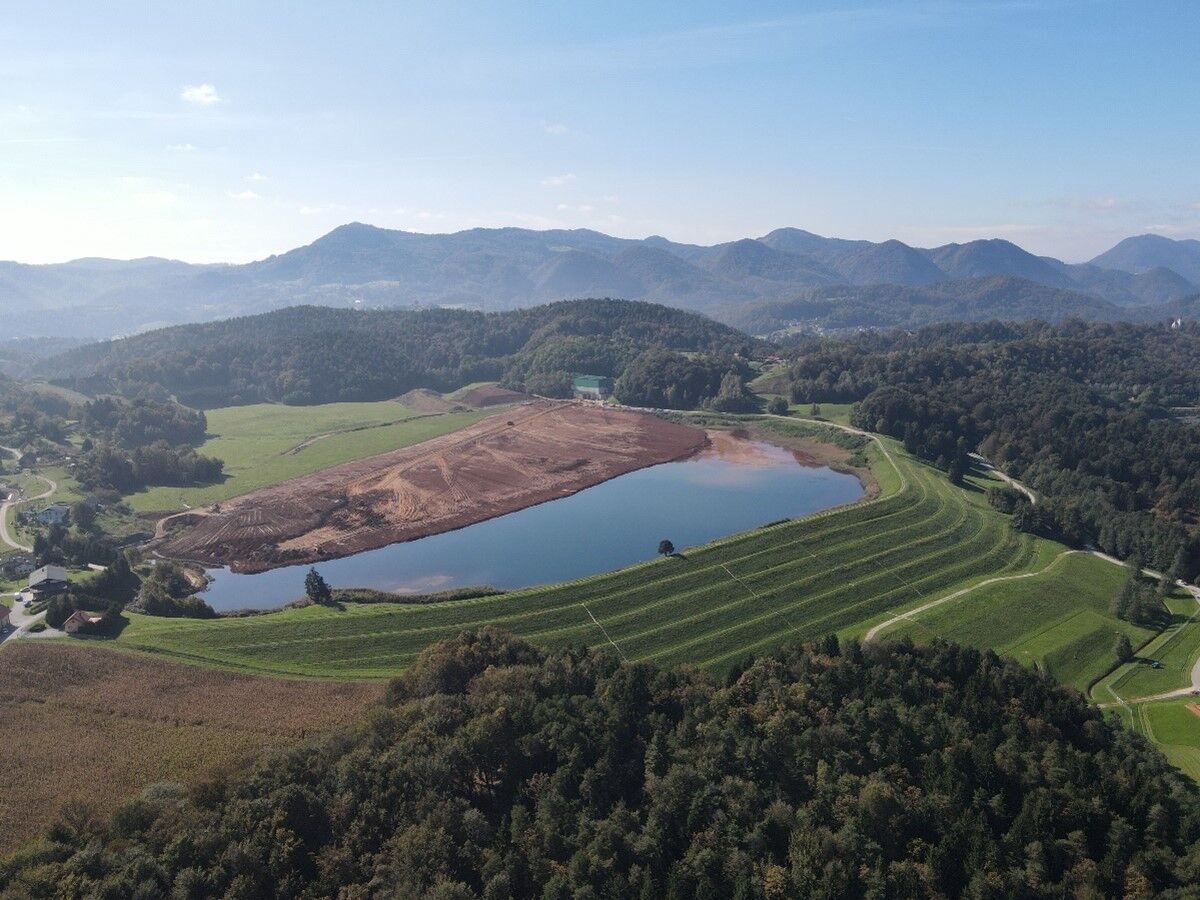
On Friday, 5 June 2026, Cinkarna Celje hosted the meeting of its Community Advisory Council, a consultative body established to promote constructive dialogue with the local communities of the municipalities of Celje, Šentjur and Štore. During the meeting, Council members were presented with the key aspects of environmental management and monitoring at the Za Travnik Facility (NZOO Za Travnik).
Red gypsum, generated during the production of titanium dioxide, is classified as non-hazardous waste in accordance with the Slovenian Technical Approval and is used as a construction material for engineered backfilling. The presentation outlined the evolution of waste management practices, from the former lagoon disposal method (1991–2008) to the current dewatering and dry backfilling process. This approach enables controlled operations, improves embankment stability and ensures the safe formation of the site's final landform. Particular emphasis was placed on effective drainage and the long-term geotechnical stability achieved through this method of backfilling.
The management system for the Za Travnik Facility is also founded on long-standing cooperation with the local community. Prior to the introduction of dry backfilling operations, Cinkarna Celje and the Municipality of Šentjur signed an agreement establishing a Joint Monitoring Committee to oversee the implementation of the works. Since 2008, the Committee has met annually to review the results of the comprehensive environmental monitoring programme and assess the condition of the surrounding natural environment.
Particular attention was given to the extensive environmental monitoring system, which covers all key monitoring locations and includes ambient air quality (PM10), wastewater, surface water, groundwater and noise. Monitoring is carried out through regular field sampling and laboratory analysis by accredited external organisations. The resulting datasets, covering the past 18 years, consistently demonstrate full compliance with all applicable regulatory limit values, with no recorded exceedances. Likewise, the Joint Monitoring Committee has concluded throughout its annual reviews that no excessive environmental impacts have been identified, confirming the long-term stability of the site and the effectiveness of the environmental management system.
Council members also visited the Za Travnik site, where they were able to observe the ongoing operations, monitoring systems and site management practices first-hand. During the visit, particular attention was also drawn to the site as an increasingly important example of good practice in the field of the circular economy.
The discussion took place in an open and constructive atmosphere. Participants highlighted the high standard of environmental oversight and were particularly impressed by the extensive scope of the monitoring programme, as well as the company's long-term commitment to the safe and stable management of the site. The discussion also emphasised that the dry backfilling method represents an important long-term solution from both a safety and stability perspective, while delivering broader environmental and community benefits.
The meeting concluded with the recognition that the site represents a technologically and environmentally sensitive area, where solutions are developed progressively, with a high degree of caution and in continuous dialogue with the local community. This approach remains focused on long-term stability, reducing environmental impacts and maintaining a balanced relationship between industrial activity and the natural environment, ultimately contributing to the well-being of the wider community and all municipalities involved.